
In practice: learning to manage money from the age of 15

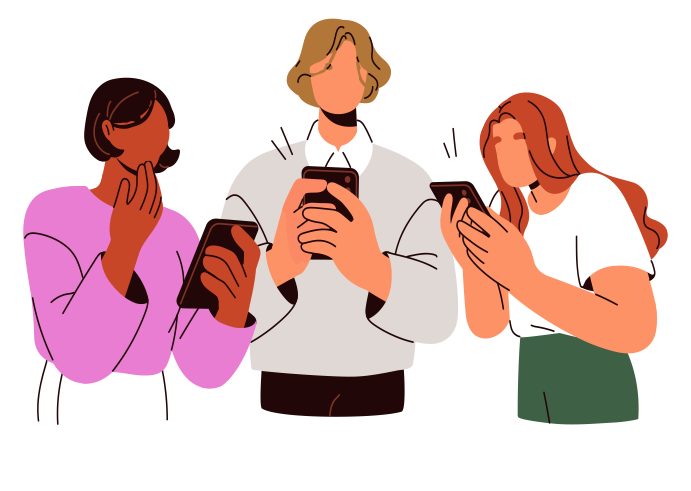
At 15, Marcel, a secondary school student, dreams of buying his first gaming computer. But between going out and everyday expenses, his pocket money quickly runs out.

Thanks to his Young People account, his Visa Debit card, and access to Web Banking, he is learning to manage his budget more effectively. His parents have set up regular automatic transfers, providing small amounts each month to help him organise his spending, avoid spending more than he has, and start saving while tracking his budget for his project.
Preparing your child for financial independence: why start early?

Learning about money can begin from an early age, but adolescence remains a key period. Eating out, transportation, social activities, and clothing are among the first expenses that teenagers begin to manage independently. These situations provide opportunities to gradually introduce the concept of budgeting and making choices.

How can parents support this independence?

Support often comes through simple everyday habits. The goal is to move step by step, according to the teenager’s pace and needs, to help build long-term independence:


  • set a monthly budget adapted to their age;
  • discuss spending priorities together;
  • encourage saving for specific projects;
  • explain the difference between needs and wants.


Cash or bank account: which option should you choose?

Cash is ideal for learning how to manage spending. A bank account, which is more practical, makes it possible to monitor your budget and account balance in real time.

Before the age of 18, the account is opened together with the parents, providing a secure framework for learning how to manage money. At 18, the young person becomes financially independent. From the age of 12, an account in their own name allows them to:


  • have a bank card for everyday purchases;
  • centralise their pocket money;
  • organise their budget;
  • benefit from parental controls (spending limits, expense tracking).


Learning to create a realistic budget: the 3-envelope method: spending, leisure and savings

Everything starts with a teenager’s everyday budget. What they already spend and what they gradually begin to manage with their parents. From there, it becomes easier to build a budget that matches their lifestyle and needs.


  • Food expenses

    When a teenager starts having lunch outside the home or attends a new school, it can be useful to define a specific budget. This budget can be calculated according to cafeteria prices, nearby shops, or the frequency of meals taken outside.

  • Leisure and social life

    Cinema trips, outings, birthdays and activities with friends... Some families choose to include these expenses in a fixed budget to help their child learn how to prioritise their spending.

  • Clothing

    Depending on the family, clothing expenses may either be managed directly by the parents or gradually incorporated into the teenager’s budget. This approach helps them compare different wishes, prioritise certain purchases, and make trade-offs between different types of spending, such as choosing between clothing, an outing or another leisure purchase.

  • Online spending

    Digital subscriptions, online purchases, apps, or mobile phone plans: teenagers can easily make these types of purchases on their own. This is an opportunity to help them develop good habits: making informed purchases, remaining vigilant about expenses, and carefully checking terms and conditions.

  • Setting aside a contingency budget

    Learning not to spend an entire budget is already an excellent financial habit.

BGL BNP Paribas Young People Pack: an ideal offer for under-25s


A bank account designed to support teenagers and young adults in gaining financial independence and managing their budget every day:

  • a fee-free account until the age of 25 (11 currencies supported);
  • a current account to receive and use money, with a Visa debit card for better control of their spending;
  • a Youth Savings Account to save money regularly for future projects while benefiting from an attractive interest rate;
  • access to Web Banking to monitor spending in real time, check balances and manage transactions anywhere, anytime;
  • features tailored to everyday needs: cash withdrawals, online payments, unlimited SEPA and international transfers, Apple Pay and Wero(2).

For parents, this account offers peace of mind by helping supervise the teenager’s spending: spending limits can be set, the card can be blocked remotely, and all transactions remain visible via Web Banking.

Sending and receiving money from friends

Over time, teenagers use different ways to manage their money easily. A bank card allows them to pay for daily expenses(1), within the limits of their budget. For small expenses between friends, such as splitting a bill or reimbursing a gift, solutions such as Wero make transfers fast, controlled, and easy.

The transition to complete independence

Once secondary school is completed, a new stage begins: studying away from home, moving into their first accommodation, and managing everyday expenses such as housing, food and transport. A bank account already used during adolescence makes this transition easier since the basics are already in place (balance tracking, budget management, and saving). This account can also receive the first sources of income, such as student jobs, paid internships, or a first salary.                                                                               

For stays or studies abroad, opening a foreign curreny account helps simplify the management of local expenses.

Student loan: financing your studies with peace of mind, whether at home or abroad

.To support higher education, a student loan can be an attractive financing solution. With the Young People Pack, it is possible to apply for a student loan to cover major expenses such as:

  • tuition fees;
  • accommodation;
  • costs related to a period of studying abroad.

For young people going abroad, the Young People Pack simplifies budget management. It allows them to carry out transactions in 11 different currencies and includes tools to monitor their spending in real time.

Your devoted BGL BNP Paribas Team, 07/10/2026

(1) Minors under the age of 18 are generally not authorised to enter into significant contracts without the consent of their parents or legal guardians. However, teenagers who are capable of discernment may make online purchases independently using their own earnings or pocket money.

(2) Opening and using a Young People Pack is subject to conditions. For minors, the agreement of the legal representative is mandatory. Certain features, such as mobile payment services (Wero, Apple Pay), can be activated subject to the eligibility of the account holder and the technical requirements applicable to each service.