
Managing finances together when living as a couple is often seen as a natural step. Opening a joint account, simplifying everyday management, letting one partner handle transfers: these choices are generally made with trust.
Over time, however, it can become more difficult to know exactly what financial resources each person has, or to assess each partner’s ability to meet their own needs.

Financial autonomy: what does it mean?

Financial autonomy refers to each partner’s ability to access their own resources, understand their personal financial situation, and meet their needs independently.

In practical terms, this is based on a few simple markers:

  • having an account in your own name;
  • having clear visibility over your income and expenses;
  • being able to make your own financial decisions for everyday spending.

The way money is managed within a couple is, above all, a choice that must suit both partners.

There is no right or wrong model: a joint account, separate accounts or a combination of both. The key point is that both partners understand and agree with the arrangement. 

It is also important to adjust financial arrangements as personal or professional circumstances change, whether due to a job change, parental leave, separation, a return to work or any other life event that may affect the family’s financial balance.
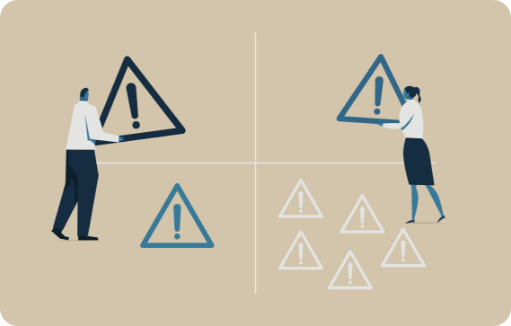

From loss of autonomy to economic abuse: A fine line

In some situations, the loss of financial autonomy goes beyond gradual or unintentional imbalances. It can also reflect financial control, established in a subtle and intentionally harmful way. This is referred to as economic abuse.

These situations often rely on recurring mechanisms, including:

  • preventing one partner from working;
  • refusing to contribute to shared expenses;
  • exclusive control over family resources;
  • confiscation of the other person’s means of payment (bank cards, account access);
  • restricting access to household money without permission;
  • taking out loans in the other person’s name or using their identity fraudulently;
  • withholding financial support after a separation.

These forms of control can develop gradually, to the point where they become difficult to identify. However, they directly undermine autonomy, freedom of choice, and the material security of the person affected.

Identifying them is the first step towards taking action.

What should alert me?

Some signs, sometimes subtle, may suggest that financial autonomy is being undermined:

  • I do not have a personal bank account or payment methods in my name;
  • I cannot freely access or use my salary;
  • I must justify all my expenses;
  • I do not have a say in how the money is spent;
  • I am subjected to pressure, humiliation, fear, or intimidation related to money.

If any of these situations apply to you, they should not be overlooked.


What should you do if you are affected by economic abuse?

The first step is to talk about it. Talk to someone you trust, a healthcare professional or a specialised organisation. Talking about the situation often helps you recognise it and begin to regain control.

At BNP Paribas, and more specifically at BGL BNP Paribas, our advisors are aware of these issues and trained to provide financial support to victims of economic abuse. Their role is to offer attentive listening, in a confidential setting, and to guide everyone towards financial solutions adapted to their situation.

Whether you are directly concerned or simply wish to review your financial autonomy, our teams are available to inform, guide, and support you.

In Luxembourg, several organisations can also support individuals experiencing loss of financial autonomy or economic abuse.

The 2060 1060, the national helpline for victims of violence (accessible 24 hours a day, 7 days a week), provides guidance towards appropriate support. You can also visit the website www.violence.lu.


Discover BNP Paribas’ public awareness campaign

Your devoted BGL BNP Paribas Team, 16/06/2026